
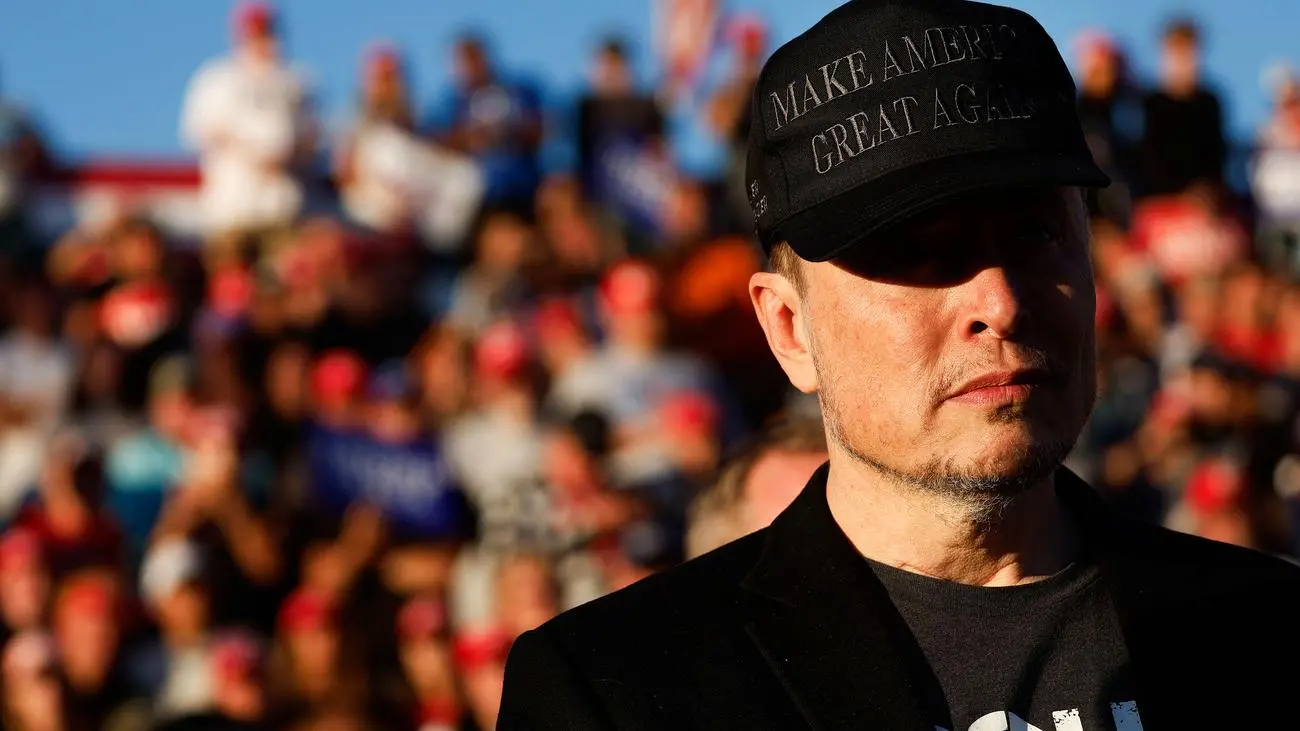
Tech billionaire Elon Musk has publicly endorsed the far-right Alternative für Deutschland (AfD) in the upcoming German federal election, sparking widespread reactions across the political spectrum. On his social media platform X, Musk wrote: "Only the AfD can save Germany," sharing a video from controversial YouTuber Naomi Seibt. The video attacks Union chancellor candidate Friedrich Merz for refusing to cooperate with the AfD. The AfD quickly capitalized on Musk's support, with candidate Alice Weidel replying, "Yes! You are absolutely right, Elon Musk!" and directing him to an interview where she blames former Chancellor Angela Merkel for ruining the country.
The AfD, which Germany's domestic intelligence agency classifies as a suspected right-wing extremist group in several states, has long sought legitimacy both domestically and internationally. Musk's endorsement marks a significant boost for the party, which is polling second in national surveys behind the opposition CDU/CSU union. The party's official X account followed up by urging users to fill out membership applications, saying: "If you also want to save Germany, then get involved and fill out the membership application right away."
Naomi Seibt, the YouTuber whose video Musk shared, rose to prominence during the COVID-19 pandemic for spreading misinformation about vaccines and lockdowns. She is also associated with the Heartland Institute, a climate-change-denying think tank based in the United States. Her video accuses Merz of maintaining a "firewall" against the AfD, a refusal that mainstream parties have upheld since the party's founding in 2013. Merz has repeatedly stated he will not cooperate with the AfD at any level.
The German government has taken a cautious stance. Deputy government spokeswoman Christiane Hoffmann said: "It is not the first time Elon Musk has commented on German politics on X. We take note of it, we do not classify it, we do not evaluate it." She added that Chancellor Olaf Scholz is concerned about the development of X since Musk's takeover, but the government continues to use the platform after weighing the pros and cons. This non-response highlights the delicate balance between acknowledging foreign interference and maintaining free speech.
FDP lead candidate and former finance minister Christian Lindner directly challenged Musk. Quoting Musk's post, Lindner wrote: "The AfD is against freedom and the economy. And it is a far-right party." He urged Musk not to draw conclusions from afar and invited him to Germany, saying: "Then I will explain to you what the FDP stands for." Lindner's invitation reflects the ongoing struggle among centrist parties to counter the AfD's growing influence while engaging with Musk's global platform.
Musk's political involvement extends far beyond Germany. In the United States, he has become a prominent supporter of President-elect Donald Trump, advising him on government efficiency and leading a commission to cut federal spending. In the United Kingdom, Musk has pledged up to $100 million to support right-wing populist Nigel Farage and his Reform UK party. His interventions in European politics have drawn accusations of meddling, but Musk has defended his actions as defending free expression.
The entrepreneur first praised the AfD during the European Parliament elections in June 2024. At that time, he wrote on X: "The AfD is labeled as right-wing extremist, but the political positions of the AfD that I have read do not sound extremist." Since then, he has continued to amplify AfD content, often using his 200-million-follower account to boost the party's messaging. This pattern has raised questions about the potential impact of foreign tech billionaires on domestic elections in Europe.
The AfD was founded in 2013 as a eurosceptic party, opposing the eurozone bailouts. It gradually shifted to the right, embracing anti-immigration, nationalist, and climate-skeptic positions. Under co-leaders Alice Weidel and Tino Chrupalla, the party has focused on criticizing the European Union, renewable energy policy, and multiculturalism. In the 2021 federal election, the AfD won 10.3% of the vote, but its support has grown since then, fueled by dissatisfaction with the coalition government's handling of the economy and migration.
Musk's endorsement is likely to dominate headlines in the final weeks of the campaign. However, it remains to be seen whether his support will translate into more votes for the AfD or whether it will backfire by reinforcing perceptions that the party is extreme. The AfD has already faced multiple scandals related to extremism, including the classification of its youth wing as a proven right-wing extremist group by intelligence authorities. Musk's involvement may further polarize opinions.
Other German politicians have also weighed in. The Greens' parliamentary group leader Britta Haßelmann called Musk's post "irresponsible" and accused him of spreading hatred. SPD general secretary Kevin Kühnert dismissed Musk as someone who "does not understand German politics" and warned against allowing foreign billionaires to influence elections. The left-wing party Die Linke, meanwhile, called on the government to take legal action against any illegal campaign interference, though analysts say Musk has likely not violated German election law.
The Federal Election Commissioner, Ruth Brand, has reminded parties that they must report any foreign donations exceeding certain thresholds. Musk's endorsement is not a financial donation, but his platform provides valuable free publicity. German party funding regulations are strict, and any direct payment from Musk to the AfD could trigger legal consequences. So far, there is no evidence of such payments.
As the election approaches, the debate over foreign interference in Germany's democracy is intensifying. Musk's actions are part of a broader trend of tech billionaires using their digital platforms to shape political discourse. Whether this will lead to new regulations remains uncertain, but for now, the AfD is happy to accept any help it can get. The party's slogan "Germany first" now finds an unexpected echo in Musk's vision of a free-speech absolutism that often aligns with far-right positions.
Source: DIE ZEIT News