

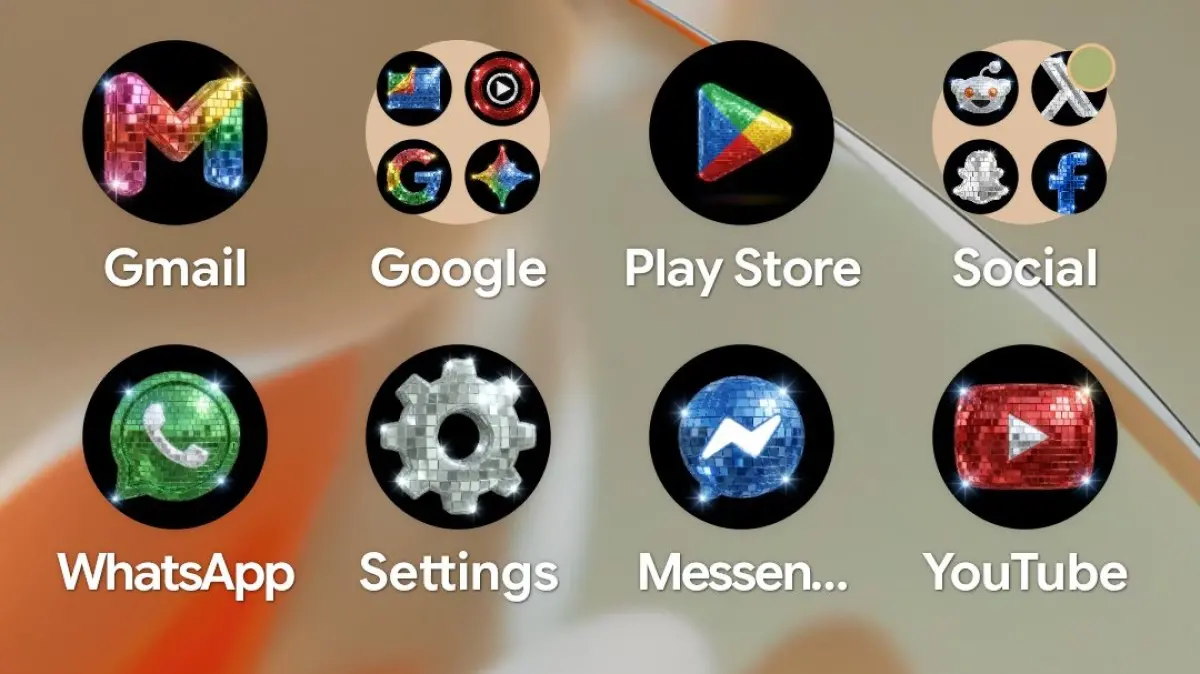
Disco has always been a genre of highs and lows, both musically and culturally. From its peak in the 1970s to the infamous Disco Demolition Night in 1979, where thousands of disco records were destroyed in a riot at a Chicago White Sox game, disco has never been far from controversy. Fast forward to 2026, and disco is making a comeback in an unexpected place: the home screens of Pixel phones.
Earlier this week, a trend of disco-ified app icons started going viral on social media. A designer known as Pixly's Race Johnson created a set of shiny, sparkly icons for popular apps like Spotify, Instagram, and Google Maps. The icons replaced standard app logos with glittering disco ball-inspired designs, each one catching the light in a nostalgic way. The trend quickly spread, with users eagerly customizing their phones and sharing screenshots online.
The trend caught the eye of none other than Android’s head, Sameer Samat. In a playful post on a social media platform, Samat teased the possibility of making these icons official. Many executives might leave such a tease as a fleeting joke, but Google, still riding the high of its I/O developer conference, decided to take action. Within days, Samat announced that the disco icons were now an official part of the Pixel Launcher.
But this is not an icon pack in the traditional sense. As one tech analyst pointed out, Google used the existing custom icon style framework available in the Pixel Launcher. This system, introduced earlier, allows users to change icon shapes, colors, and themes without third-party launchers. Google simply created a new preset that applies the disco effect to all supported apps. The flexibility of this system allowed the company to deploy the update in record time, bypassing the need for a separate app or APK download.
The official release sparked a wave of creativity. Even within Google, employees began showing off their own takes. One product manager shared a home screen he called 'Sisko Frisco Disco Fresco,' a playful reference to Star Trek and the disco theme, with carefully arranged apps forming a colorful mosaic. The image quickly circulated online, inspiring others to craft elaborate layouts.
Not everyone is thrilled, however. The trend started after Spotify temporarily changed its app icon to a disco ball, a move that received mixed reactions from users. Some found it fun; others called it gimmicky. Google’s embrace of the disco icon trend has similarly divided opinion. Some Pixel users love the sparkle, while others feel it’s too flashy. But the company has always encouraged personalization, and this feature adds yet another layer of customization for those who want it.
The disco icons are now available to all Pixel users running the latest version of the Pixel Launcher. To apply them, users go to the home screen settings, choose 'Icon styles,' and select the new disco preset. The icons will automatically apply to most commonly used apps, with more being supported over time. It’s a small but delightful update that highlights Google’s willingness to experiment and have fun with its software.
This release also hints at a broader strategy: making the Pixel Launcher a more powerful and flexible platform. The custom icon style system, which was previously limited to basic shape changes, now has the potential to become a marketplace of sorts for official themes. If Google can turn a viral meme into a fully supported feature in less than a week, what else might they add? Perhaps holiday-themed icons, artistic collaborations, or even user-created designs approved through a review process.
The disco resurgence is not without precedent. Pop culture has seen a revival of disco elements in recent years, from fashion to music. The genre’s association with joy, dance, and extravagance fits well with the playful identity of the Pixel brand. For many users, these icons are a nostalgic throwback; for younger users, they are simply a fun new look.
The reaction has been overwhelmingly positive on social media, with users sharing screenshots of their disco-themed home screens and tagging friends. Some have even created matching wallpapers using AI tools to complete the aesthetic. The trend has become a mini-movement, with people competing to see who can create the most over-the-top layout.
Of course, there are practical considerations. The disco icons, with their shimmering gradients and reflections, may slightly increase battery usage on OLED screens due to the dynamic colors. But for most users, the impact is negligible. Google’s implementation ensures that the icons remain recognizable; the core shape of each app is preserved, only overlaid with a disco texture.
For now, the disco icons are a temporary treat. Google has not announced how long they will remain available, but given the enthusiastic response, they may stick around for a while—or even inspire a permanent addition to the custom style library.
So, are you ready to shake your groove thing? Pixel users can head to their launcher settings and give these icons a try. Whether you love them or hate them, there’s no denying that Google has once again turned a fleeting internet moment into a delightful software experience. And that’s exactly the kind of bold, playful move that makes the Pixel line stand out in a sea of smartphones.
The disco icons are available now. Let us know in the comments if you’ve decked out your home screen. Can you feel the beat?
Source: Android Authority News