

Zelensky's Threat Sparks Diplomatic Crisis
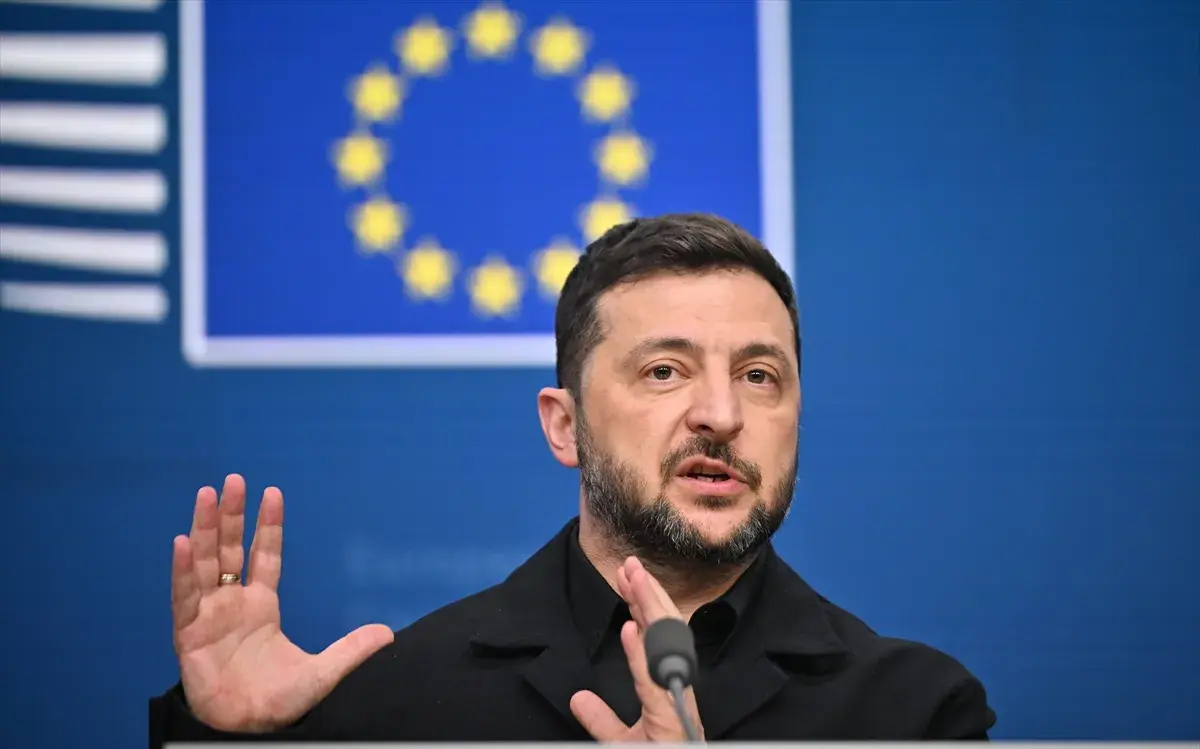
Ukrainian President Volodymyr Zelensky has escalated tensions with Hungary by warning that if Prime Minister Viktor Orbán blocks a critical EU loan package, Ukrainian soldiers will be given his contact information to "speak to him in their own language." The remark, made during a press conference on Tuesday, has triggered a diplomatic firestorm and drawn condemnation from opposition leaders in Budapest.
Zelensky's comments were aimed at the proposed 90-billion-euro joint EU loan designed to finance weapons and fighter jets for Ukraine's war effort. Without naming Hungary directly, Zelensky said: "If this person blocks the loan or its first tranche, we will give the address of this person to our armed forces so they can call him and speak to him in their own language." The implied threat—that Ukrainian troops might personally confront Orbán—was widely interpreted as an unprecedented escalation in the ongoing feud between Kyiv and Budapest.
Background of the Dispute
The confrontation stems from a broader disagreement over energy security and European solidarity. In late January, a Russian missile strike damaged infrastructure near the Druzhba oil pipeline, which supplies crude oil from Russia to Hungary via Ukraine. Hungary claims the pipeline is in better condition than ever and accuses Kyiv of deliberately delaying repairs for political reasons. Ukraine insists the damage is too severe to fix quickly and has accused Hungary of blackmailing the EU by threatening to veto the loan.
The Druzhba pipeline is crucial for Hungary's energy security, providing about 70% of its oil imports. Orbán's government has warned that a prolonged shutdown could lead to fuel shortages and economic disruption. In response, Budapest has linked the resumption of oil flows to its approval of the EU loan, a move that Kyiv and many EU member states consider unacceptable.
Hungarian Opposition Reacts
Hungarian opposition politician Péter Magyar, leader of the Tisza Party, was quick to condemn Zelensky's remarks. Speaking at a public forum in Szarvas, Magyar said: "No foreign leader should threaten a Hungarian citizen or politician. If these words are accurate, President Zelensky must retract them and clarify his position." Magyar emphasized that this principle applies to any Hungarian government, whether current or future, and called for calm diplomacy.
Magyar also urged Ukraine to provide transparent information about the pipeline's condition and to resume oil transit as soon as possible. He offered to inspect the pipeline together with Prime Minister Orbán if necessary, a move that underscores the domestic political pressure on the issue. The opposition's stance reflects a rare cross-party consensus on defending national sovereignty, even as they criticize Orbán's authoritarian tendencies.
EU Concerns and Wider Implications
The loan package is part of a larger EU effort to support Ukraine against Russian aggression, including military aid and reconstruction funds. Any single member state's veto can block the entire package, giving Hungary disproportionate leverage. Brussels has grown increasingly frustrated with Orbán's repeated obstructionism on Ukraine-related measures, including sanctions against Russia and the allocation of financial support.
European diplomats have privately warned that Hungary's stance risks undermining the EU's credibility and unity. Some have suggested bypassing the veto by using alternative legal mechanisms, such as a coalition of willing states acting outside the EU framework. However, such moves could further fragment the bloc's response to the war.
Zelensky's threat marks a new low in bilateral relations, which have been strained for years over issues ranging from minority rights to media freedom. Orbán has maintained close ties with Russian President Vladimir Putin, even as other EU leaders have isolated Moscow. Budapest has also blocked Ukraine's NATO accession and refused to supply weapons, arguing that the war must end through negotiations.
Historical Context of Ukraine-Hungary Tensions
The conflict between Ukraine and Hungary predates the full-scale invasion of 2022. Since 2014, Hungary has objected to Ukraine's language laws, which restrict the use of minority languages including Hungarian in education and public life. Budapest has accused Kyiv of discriminating against the ethnic Hungarian community in western Ukraine, which numbers around 150,000 people. In response, Hungary has vetoed high-level NATO-Ukraine meetings and blocked EU statements critical of Russia.
Orbán's government has also opposed sanctions on Russian energy exports, citing Hungary's dependence on Russian oil and gas. Despite EU efforts to diversify, Hungary continues to import significant volumes of Russian crude via the Druzhba pipeline and Russian natural gas via the TurkStream pipeline. The current oil dispute is therefore not just about technical repairs but about fundamental energy leverage.
Meanwhile, Ukraine sees the blockage of the EU loan as a direct threat to its survival. With Russian forces advancing in the east and air strikes targeting critical infrastructure, Kyiv urgently needs more air defense systems, artillery, and ammunition. The 90-billion-euro loan would provide a lifeline, allowing Ukraine to purchase weapons from Western manufacturers and sustain its defense for months.
International Reactions
International observers have expressed concern over Zelensky's aggressive language. The United States and United Kingdom have not officially commented, but diplomatic sources suggest that Washington is urging restraint. NATO Secretary General Jens Stoltenberg has called for unity among allies and reiterated the importance of supporting Ukraine without internal disputes.
Russia, meanwhile, has seized on the incident to portray Ukraine as aggressive and unreasonable. State media outlets have highlighted Zelensky's threat as evidence that Kyiv is unwilling to negotiate or compromise. The Kremlin has also resumed its narrative that the West is using Ukraine to weaken Russia and divide Europe.
Within Hungary, Orbán's Fidesz party has used the controversy to rally nationalist sentiment. Government spokesperson Zoltán Kovács accused Zelensky of "unacceptable blackmail" and said Hungary will not bow to foreign pressure. The incident is likely to strengthen Orbán's domestic position by allowing him to portray himself as a defender of Hungarian sovereignty against external interference.
What Happens Next?
The immediate future of the EU loan remains uncertain. Diplomatic efforts are underway to broker a compromise, possibly by separating the pipeline issue from the loan approval. Some EU officials have suggested providing the loan through bilateral agreements with individual member states rather than a joint EU mechanism, which would bypass Hungary's veto. However, this would require 26 member states to act together, a complex legal and political challenge.
Meanwhile, the Druzhba pipeline remains offline, and both sides have dug in. Ukraine insists that repairs are ongoing but cannot be rushed due to security risks. Hungary demands a clear timeline and accuses Ukraine of deliberate sabotage. The standoff shows no signs of resolution, and Zelensky's threat has only deepened the mistrust.
For Orbán, the incident provides a useful distraction from domestic economic woes, including high inflation and a weakening forint. By framing the dispute as a battle against Ukrainian unreasonableness and EU overreach, he can reinforce his image as a strongman defender of national interests. For Zelensky, the threat may backfire by alienating moderate EU members and giving Orbán an opportunity to play the victim.
The broader implications for European unity are troubling. The war in Ukraine has entered its third year with no end in sight, and internal divisions among allies are becoming more pronounced. Populist leaders in other EU countries, such as Slovakia's Robert Fico and Poland's new government, are also expressing skepticism about continued support for Ukraine. The Zelensky-Orbán showdown may be just the beginning of a more fractious period in European geopolitics.
Source: DailyNewsHungary News