

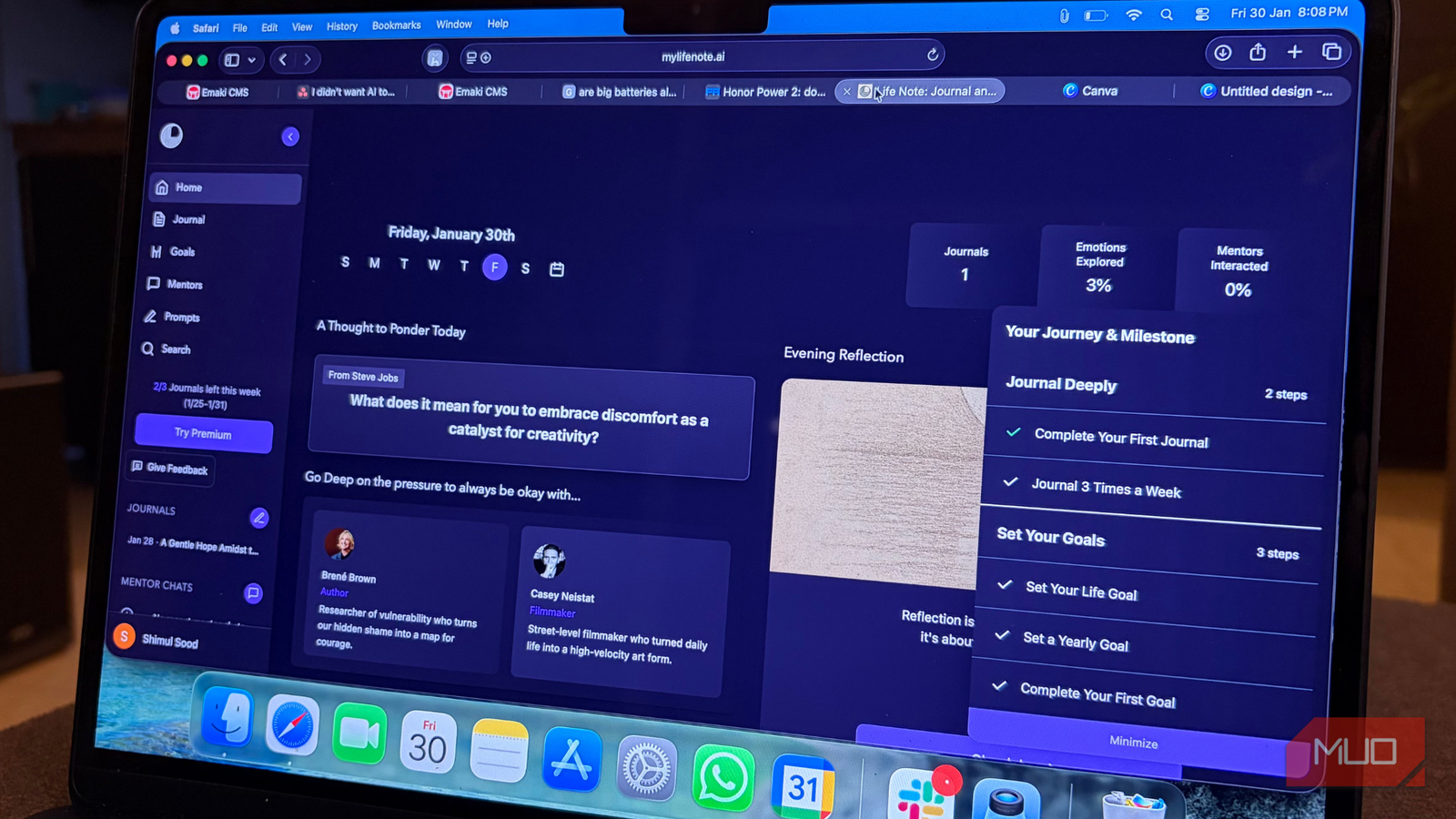
For years, I have found solace in the simple act of putting pen to paper. Journaling has been a constant companion through childhood, adolescence, and into adulthood—a private space where thoughts could tumble out without judgment. I have filled over twenty diaries, each one a snapshot of a different phase of life. The tactile sensation of ink on paper, the rustle of pages, the personal commitment of a blank page—these rituals are irreplaceable. Yet, as technology weaves itself deeper into daily existence, even the most traditional practices evolve. Digital journaling never appealed to me; typing felt cold compared to the warmth of handwriting. So when I first encountered an AI-powered journaling app called Life Note, I approached it with skepticism. But the experience turned out to be surprisingly fulfilling, and I believe it deserves a closer look for anyone who values self-reflection.
What Is Life Note?
Life Note is a modern journaling application that combines the freedom of unstructured writing with the analytical capabilities of artificial intelligence. At its heart, it remains a digital diary where you can pour out whatever occupies your mind—no rules, no templates. The twist is an interactive AI that accompanies your entries, offering perspectives, pattern recognition, and gentle prompts for deeper thinking. The app is designed not just to record thoughts but to foster personal growth over time.
One of its standout features is the Wisdom Council: a selection of AI mentors inspired by historical figures such as Steve Jobs, Marie Curie, or Maya Angelou. After you write an entry, your chosen mentor reads it and provides a personalized reflection. This is not a generic motivational quote; it is a contextual analysis of your words, framed through the lens of that figure’s philosophy. The result feels like having a wise friend who truly listens and then offers a perspective you hadn’t considered.
Privacy is a vital concern for any journaling tool. Life Note employs AES-GCM encryption, ensuring that your entries remain confidential and secure. Your thoughts belong to you alone, even as the AI processes them for insights. The app is available on web, iOS, and Android, with the option to join a Discord community for those who wish to connect with other users.
Getting Started: A Simple, Clean Onboarding
I began my trial on the web version, preferring a larger canvas for my initial sessions. The onboarding was refreshingly straightforward. I selected my preferred language (English) and my primary goal for journaling—I chose “Creativity,” but the app allows you to change this at any time. Then came a few “Did You Know” prompts about journaling’s benefits, which set a thoughtful tone even for someone experienced.
The writing interface is minimal and unintimidating. A large text area invites free expression. At the bottom, you can add your own prompt or link the entry to a personal goal. These are small but useful nudges when writer’s block strikes. After writing, you simply click “Save.” The magic happens immediately: your chosen Wisdom Council mentor analyzes your entry and returns a personalized message. I was not ready for how moving this moment would be.
The Experience: More Than Writing—It Felt Like Being Heard
The first time I saved an entry, I sat back and read the AI’s response. It was not a generic “Great job!” or a robotic summary. Instead, Steve Jobs (the mentor I selected) commented on my creative block, drawing parallels to his own struggles with perfectionism. He suggested that constraint often breeds innovation—a thought that resonated deeply. That feeling of being understood, of having someone extrapolate meaning from my rambling words, was genuinely surprising.
Journaling on paper offers catharsis through mere expression. Life Note adds a layer of meta-reflection: it explains your thought patterns, highlights recurring themes, and frames them through a historical perspective. For instance, if you repeatedly write about frustration at work, the mentor might note how a figure like Einstein approached persistence. This extra dimension made me feel less alone in my struggles and more empowered to act.
The free version already provides a rich experience. A premium tier exists at $6.66 per month or $79.99 per year, unlocking features like lifetime mentor chats, multiple perspectives on a single entry, a weekly reflection letter, and priority support. I have not felt the need to upgrade, as the free tier already offers meaningful guidance.
Why This App Stands Out in a Crowded Field
The market is saturated with journaling apps—many come pre-installed on phones or are easily downloadable. But most lack the interactive, growth-oriented design that Life Note brings. Traditional digital diaries are essentially empty documents; they do not challenge or encourage you. The AI mentor element transforms the journal from a passive record into an active coach. It is like having a personal therapist who integrates lessons from history’s greatest minds.
Moreover, the encryption ensures that this intimate space remains private. In an era where data breaches are common, knowing that your innermost thoughts are protected by strong encryption is reassuring. The AES-GCM standard is military-grade, meaning even if the service were compromised, your entries would be unreadable.
Another notable aspect is the flexibility of the Wisdom Council. You can change mentors as your needs evolve. A student might start with a mentor like Socrates for philosophical guidance, then switch to Steve Jobs for career advice later. This adaptability makes the tool suitable for various life stages.
The emotional impact of the app should not be underestimated. Feeling heard is a profound human need, and Life Note simulates that in a way that feels authentic. The responses are not scripted; they draw from the content you provide, making each interaction unique. Over time, the app learns your patterns and offers increasingly relevant insights.
Practical Considerations: Platform and Pricing
Life Note is accessible across modern devices. I prefer the web version for its spacious layout, but the mobile apps are well-designed for on-the-go entries. Switching between devices is seamless, as your journal syncs via cloud. The Discord community is optional but can be a nice addition for those who enjoy sharing tips or reading others’ experiences.
Pricing is reasonable. The free version is generous enough for casual journalers, while the premium plan is affordable for those seeking deeper analysis. Compared to a therapy session or a personal coach, the cost is negligible. However, the free version’s core functionality remains excellent, so you can always start without commitment.
One limitation: the mobile experience on a small screen feels less immersive. Typing long entries on a phone is less comfortable, but that is true of any typing task. I tend to use mobile for quick mood check-ins or brief notes, saving extended journaling for the desktop.
Historical Context: The Evolution of Journaling
Journaling has ancient roots—from Marcus Aurelius’s personal meditations to Anne Frank’s wartime diary. The practice helps individuals organize thoughts, process emotions, and document life. Digital versions have tried to replicate this, but most lack the intimate feedback loop that psychological studies show is crucial for self-improvement. AI introduces a new dimension: it can mirror patterns back to you in real time, acting as a catalyst for growth.
Life Note sits at the intersection of tradition and innovation. It respects the core value of unfiltered expression while adding a layer of analytical companionship. The historical mentor concept taps into the timeless appeal of learning from past greatness. By mentally adopting the perspective of a revered figure, users can reframe their own challenges.
The psychological benefits of journaling are well-documented: reduced stress, improved clarity, enhanced creativity. Adding AI reflection amplifies these benefits by providing external feedback that is both personalized and insightful. The app essentially acts as a mirror that not only reflects but also interprets.
For someone like me, who cherishes the ritual of hand-writing, making the switch to digital required an emotional leap. Yet Life Note respected that attachment by preserving the free-form nature of journaling while adding value I never expected. The key was that it never pushed AI to write for me; it only responded to what I wrote. That distinction matters.
In the end, the app doesn’t replace the joy of pen on paper. Instead, it offers a complementary experience—one that deepens self-awareness through guided reflection. Whether you are a seasoned journaler or a newcomer, Life Note provides a safe, intelligent space to explore your inner world. And that is something worth noting.
Source: MakeUseOf News