

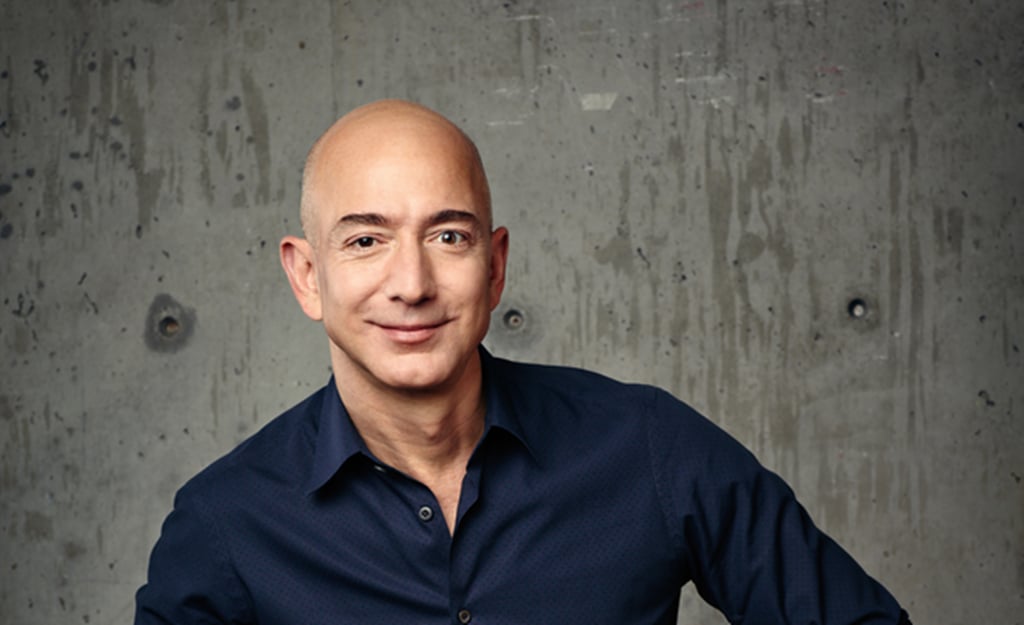
Jeff Bezos, the founder of Amazon and one of the most influential figures in technology, has bluntly rejected the narrative that artificial intelligence will lead to widespread job losses. In a recent interview, Bezos stated that AI doomsayers are 'dead wrong' about the future of employment, arguing that the technology will ultimately create more opportunities than it destroys. His comments come amidst a growing public debate about the impact of AI on the workforce, with some experts warning of a looming crisis and others pointing to historical precedents of technological transformation.
Bezos, who stepped down as Amazon’s CEO in 2021 but remains executive chair, has a long history of forward-thinking investments in AI and automation. Under his leadership, Amazon integrated AI into everything from product recommendations to warehouse robotics, yet the company also became one of the world’s largest employers, adding hundreds of thousands of jobs globally. Bezos believes that the same pattern will play out across the economy as AI matures.
The Amazon founder’s stance aligns with a more optimistic camp in the AI debate, which includes figures like Mark Zuckerberg and Satya Nadella. They argue that while AI will automate certain routine tasks, it will also unlock new forms of work, creativity, and productivity. Bezos likened the current anxiety to the misplaced fears that accompanied the rise of the internet. 'When the internet came along, people were terrified that it would destroy jobs. Instead, it created millions of new roles—from web developers to social media managers,' he said.
A Historical Perspective on Technology and Employment
Bezos’s argument is rooted in economic history. The Industrial Revolution displaced many agricultural laborers but eventually created a vast array of factory, administrative, and service jobs. The advent of personal computing similarly eliminated some clerical positions while birthing entire industries like software engineering, IT support, and digital marketing. Bezos contends that AI will follow the same trajectory: some jobs will be automated, but the net effect will be positive if society adapts.
The key, he said, is not to resist AI but to invest in education and retraining. 'We need to be obsessed with the question: how do we help people gain the skills to work alongside AI? Because that is where the future lies,' Bezos added. He pointed to Amazon’s own initiatives, such as its $700 million investment in upskilling its workforce by 2025, as a model for other companies.
Contrasting Views from AI Skeptics
Not everyone agrees with Bezos. Critics, including some economists and labor advocates, warn that AI could lead to structural unemployment, particularly for workers in routine cognitive and manual roles. A 2023 study by Goldman Sachs estimated that AI could replace the equivalent of 300 million full-time jobs globally. However, the same report also noted that new jobs could emerge, echoing Bezos’s sentiment. The difference lies in the speed and scale of the transition.
Bezos’s remarks are especially notable given Amazon’s own push for automation. The company has deployed over 750,000 robots in its fulfillment centers, raising concerns among warehouse workers. Yet Amazon has consistently hired more human workers even as it adds robots, suggesting that automation can complement rather than supplant human labor.
The Role of Human Ingenuity
At the core of Bezos’s optimism is a belief in human creativity and adaptability. 'People underestimate how inventive humans are. We constantly find new ways to provide value,' he said. He envisions a future where AI handles tedious tasks, freeing humans to focus on higher-level thinking, innovation, and interpersonal relationships. This aligns with his broader philosophy that technology should simplify life and empower individuals.
Bezos also addressed the fear that AI could concentrate wealth and power in the hands of a few tech giants. He acknowledged the risk but argued that regulation, competition, and distributed AI access—such as through open‑source models—can mitigate it. 'We’ve seen this movie before. The solution is not to stop progress but to manage it responsibly and ensure the benefits are widely shared,' he said.
Immediate Implications for Workers and Business
For businesses, Bezos’s perspective serves as a call to action: rather than fearing AI, companies should proactively explore how to integrate it to boost productivity and create new roles. For workers, it underscores the importance of continuous learning. Fields like data analysis, AI ethics, prompt engineering, and robotics maintenance are already emerging as growth areas.
Governments, too, have a role. Bezos supports policies that encourage AI research while providing social safety nets for displaced workers. He cited examples from Denmark and Singapore, where governments have invested heavily in lifelong learning programs. 'We can have both dynamism and security. It’s not an either-or choice,' he stated.
The debate over AI and jobs is far from settled. But Bezos’s confident dismissal of doomsayers injects a powerful voice into the conversation. His track record—building Amazon from a garage startup into a global behemoth while simultaneously championing automation—lends weight to his claims. Whether history proves him right remains to be seen, but his call for balanced, optimistic engagement with AI is a timely reminder that the future is not predetermined.
Source: eWEEK News