

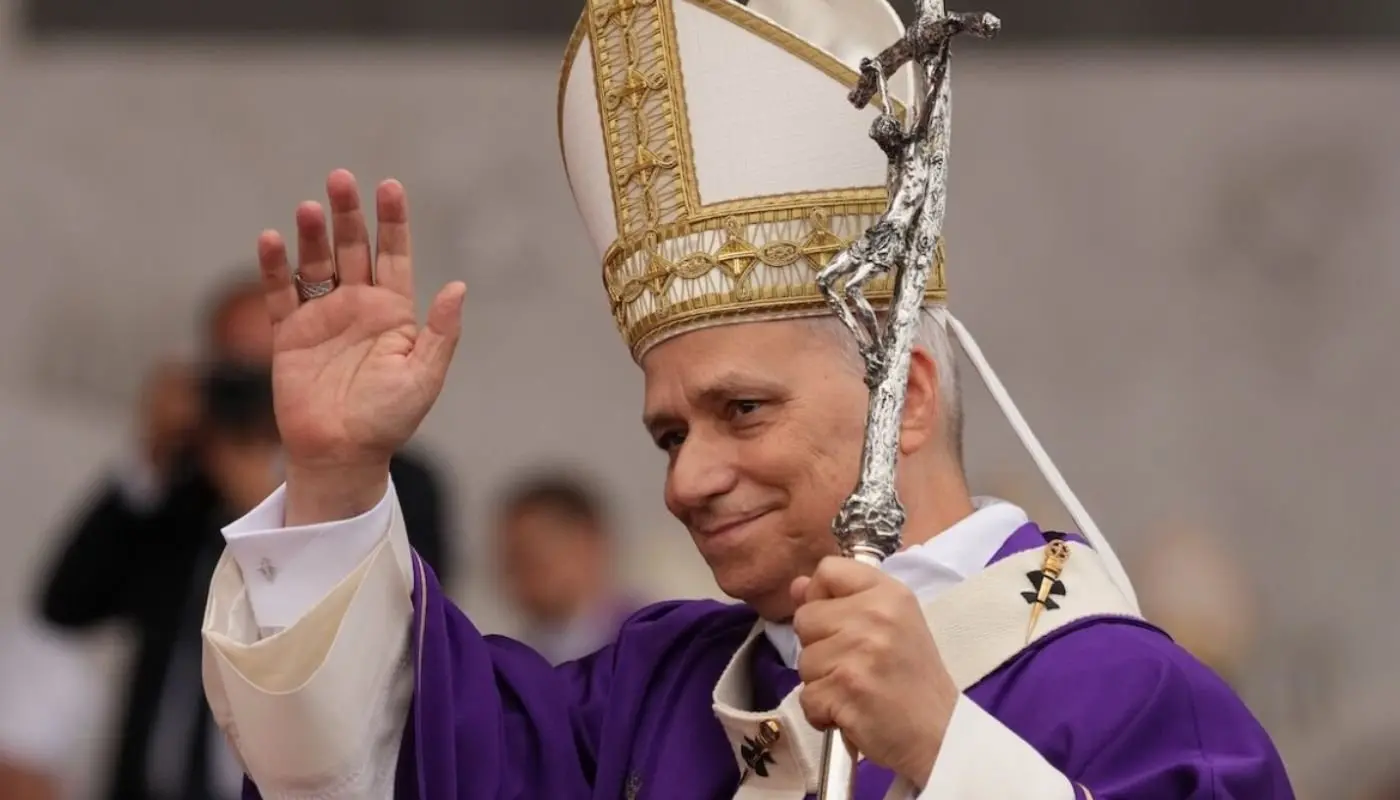
In a landmark document released from the Vatican, Pope Leo XIV has issued his first encyclical, titled Ex Corde Machinae (From the Heart of the Machine), in which he declares that “moral AI is not enough.” The encyclical, which has already sparked intense debate among theologians, technologists, and ethicists, argues that current efforts to embed ethical principles into artificial intelligence systems are fundamentally inadequate if they do not address the deeper spiritual and social dimensions of human life.
The Pope writes that while ethical guidelines—such as transparency, fairness, and accountability—are necessary first steps, they risk becoming superficial “patches” on a system that treats human beings as mere data points. “We cannot reduce the mystery of the human person to algorithmic categories,” he states. “A machine that avoids causing harm is not the same as a machine that actively seeks the good of the person.” This distinction lies at the heart of the encyclical, which calls for a paradigm shift in how AI is designed, deployed, and governed.
Background: The Vatican’s Evolving Stance on AI
Pope Leo XIV’s encyclical builds on a growing body of Catholic social teaching on technology. His predecessor, Pope Francis, had repeatedly warned about the dangers of artificial intelligence, particularly in the areas of surveillance, weaponization, and social manipulation. In 2020, the Vatican released the “Rome Call for AI Ethics,” a document that outlined principles such as transparency, inclusion, and responsibility—signed by executives from Microsoft, IBM, and other tech giants. However, Pope Leo XIV now argues that these principles, while valuable, do not go far enough.
The new encyclical takes a more radical stance. It suggests that the very framing of “ethical AI” often serves to legitimize a profit-driven model of technological development that prioritizes efficiency and control over human flourishing. The Pope writes, “We have seen that ethics can be co-opted by the very powers that create the problems ethics are meant to solve. A corporation may adopt a code of conduct while simultaneously exploiting its workers, avoiding taxes, and designing addictive products.”
Key Themes of Ex Corde Machinae
The encyclical is divided into four main sections, each addressing a different aspect of the AI challenge.
1. The Anthropology of the Machine
Pope Leo XIV argues that many AI systems are built on a flawed understanding of human nature. They see humans as predictable, rational actors whose behavior can be modeled and optimized. In reality, he writes, human beings are “capable of love, sacrifice, and irrational creativity”—qualities that cannot be captured by even the most advanced neural networks. He warns that treating people as predictable inputs leads to systems that manipulate rather than serve.
2. The Economy of Attention and Data
The encyclical sharply criticizes the business models of major technology companies, which the Pope describes as “an economy of extraction.” He writes, “Your attention is not merely a commodity; it is the raw material of your soul. When machines are designed to capture and monetize your focus, they are in fact colonizing your inner life.” The document calls for regulations that would limit the use of AI in advertising, social media, and other surveillance-based applications.
3. The Global Digital Divide
Pope Leo XIV highlights the disparity between those who develop and control AI and those who are subject to its effects. He notes that the majority of AI research and development occurs in a handful of wealthy nations, while the rest of the world is either excluded from the conversation or treated as a testing ground. “There can be no moral AI without global justice,” he writes, urging international bodies to create frameworks that ensure equitable access to the benefits of technology.
4. The Call for a New Virtue Ethic
Instead of a rule-based approach to AI ethics, the Pope proposes a “virtue ethic” for machines—but with an important caveat. He acknowledges that machines cannot possess virtues in the same way humans do, but they can be designed to reinforce virtuous behavior in their users. “An AI should not merely avoid lying; it should encourage truthfulness. It should not merely refrain from violence; it should promote peace.” This vision requires a fundamental rethinking of AI training data, reward functions, and objectives.
Reactions from the Tech World and Beyond
The encyclical has received mixed reactions. Some tech executives have praised the Pope for raising important questions, while others have dismissed it as idealistic. Dr. Maria Santos, professor of AI ethics at Georgetown University, said that the document “challenges the tech industry to move beyond checklists and toward genuine transformation.” She noted that the encyclical’s emphasis on virtue rather than compliance could inspire a new generation of AI designers.
However, critics argue that the Vatican lacks the technical expertise to propose realistic solutions. “It’s easy to call for virtue, but who decides what counts as virtuous?” asked Eric Chen, a machine learning engineer at a major Silicon Valley firm. “And how do you encode that into a loss function?” The encyclical anticipates such objections, stating that the task is not to install a fixed set of values but to ensure that human judgment remains central to every decision made by AI systems.
Religious leaders from other traditions have also weighed in. The World Council of Churches issued a statement supporting the encyclical’s call for justice, while Muslim and Jewish scholars have noted parallels with their own ethical traditions. The document is likely to be discussed at upcoming interfaith dialogues on technology.
Historical Context: Papal Teaching on Technology
This is not the first time a pope has addressed the moral implications of technology. In 1967, Pope Paul VI wrote Populorum Progressio, which touched on the role of technology in development. Pope John Paul II’s 1991 encyclical Centesimus Annus warned against a “technocratic” mindset. And Pope Francis’s 2015 encyclical Laudato Si’ extensively meditated on technology and ecology. Pope Leo XIV’s Ex Corde Machinae is seen as a natural successor, bringing these teachings into the age of artificial intelligence.
The new encyclical also draws on the thought of Romano Guardini, a 20th-century theologian who wrote about the “end of the modern world” and the rise of the machine. Guardini argued that technology could either liberate or enslave, depending on whether it is guided by a true understanding of human dignity. Pope Leo XIV quotes Guardini’s The End of the Modern World, writing: “The machine amplifies the power of the human will, but it also threatens to consume the will itself if not placed in service of love.”
What Comes Next?
The encyclical does not offer a step-by-step policy plan, but it does call for concrete actions. It urges Catholic universities and research centers to lead the way in developing “human-centered AI,” and it encourages lay Catholics working in technology to form communities of conscience. The Vatican has announced that a Pontifical Academy for AI will be established to study these issues further and to advise the Church.
Meanwhile, tech companies are watching closely. Some have already announced internal reviews of their product design processes in light of the encyclical. Whether these reviews lead to real change remains to be seen. What is clear is that Pope Leo XIV has thrown down a gauntlet: moral AI, he insists, is not enough. What is needed is a technological transformation that places the human person—and not merely the algorithm—at the center of progress.
Source: eWEEK News