

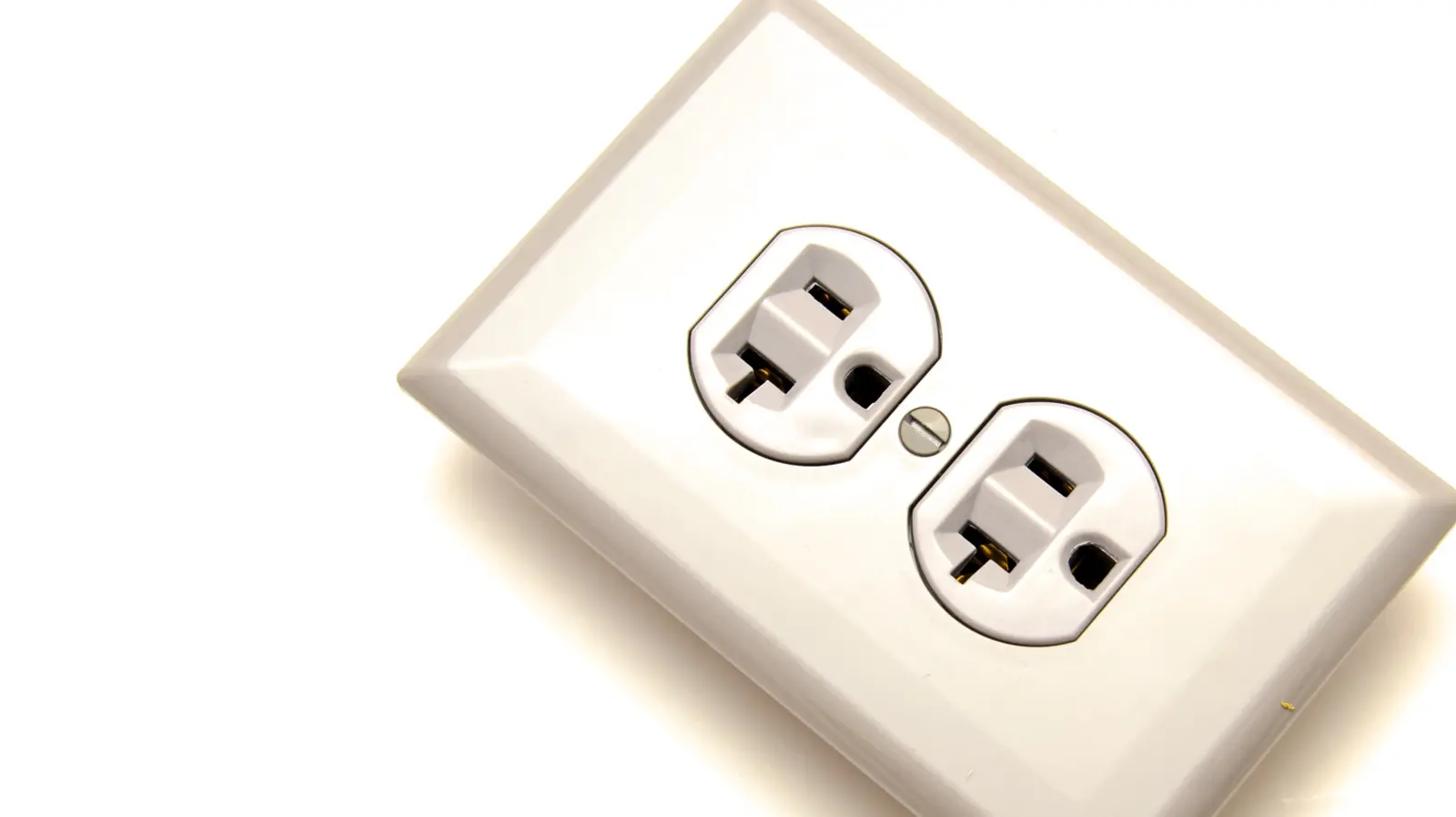
If you've ever travelled overseas, you're likely familiar with the many different types of electrical plugs and outlets. In the US, standard sockets are two thin vertical holes next to each other, often with an upside-down U-shaped grounding hole at the bottom. In Europe, you'll see two round holes or three prongs in a triangle pattern. But there is one design that stands out: the outlet with a T-shaped hole. What is this port for, and why is it configured that way?
The presence of a T-shaped hole on a wall outlet simply indicates that it is rated at 20 amperes (A) rather than the typical 2.5 to 15A found in most household receptacles. This higher capacity allows the socket to be used for heavy-duty appliances and equipment—think industrial power tools, space heaters, large air conditioners, and electric vehicle chargers. The T-shape accommodates the special horizontal blade on 20A plugs, which prevents them from being inserted into a standard 15A outlet.
What Does a T-Shaped Hole Mean?
A T-shaped opening is formally part of a NEMA 5-20R or NEMA 6-20R receptacle. The “R” stands for receptacle, while “P” would indicate a plug. The NEMA (National Electrical Manufacturers Association) standard ensures that outlets and plugs are compatible across manufacturers. The T-shaped hole allows for either a 15A or 20A plug: a 15A plug has two vertical blades and can fit into the T-slot (the slot is wide enough to accept the vertical blade), while a 20A plug has one vertical blade and one horizontal blade that fits uniquely into the T.
It’s important to note that a 20A outlet must be connected to a 20A circuit breaker and wiring that can handle 20A (typically 12-gauge wire or heavier). Using a 20A outlet on a 15A circuit is a code violation and a fire hazard because the outlet can draw more current than the wiring is rated for.
Types of 20A Outlets: 125V vs. 250V
There are two common configurations of T-slotted outlets. The NEMA 5-20R is a 125-volt, 20-amp receptacle. It has two vertical slots (one of which is T-shaped) and a round grounding hole. The neutral slot is the T-shaped one, while the hot slot is a straight vertical blade. This type is often used in kitchens, garages, workshops, and commercial spaces where appliances like heavy mixers or large space heaters are needed.
The NEMA 6-20R is a 250-volt, 20-amp receptacle. It differs significantly: it has two flat pins in a horizontal orientation—one is the hot, the other is the neutral—and a round grounding pin. The T-shaped hole appears on the neutral side. This receptacle is less common in residential settings but is frequently installed for electric vehicle Level 2 charging stations, large window air conditioners, or heavy machinery in factories.
You can tell which type you have by looking at the orientation of the rectangular slot next to the T-slot. If it is vertical, it is a 125V socket (NEMA 5-20R). If it is horizontal, it is a 250V socket (NEMA 6-20R). This simple visual cue tells you the voltage and the intended use.
Safety Features Commonly Incorporated into 20A Outlets
Because 20A outlets serve high-power loads, they often include advanced safety features to protect users and property. Many 20A receptacles are Ground Fault Circuit Interrupter (GFCI) outlets. A GFCI monitors the current balance between hot and neutral wires. If it detects a ground fault—for example, current leaking through water or a person—it trips the circuit in milliseconds, preventing electrocution. GFCI outlets are required by code in bathrooms, kitchens, basements, garages, and outdoor areas where water might be present.
Another common feature is Arc-Fault Circuit Interrupter (AFCI) protection. AFCI outlets detect dangerous arcing conditions that can occur due to damaged wiring, loose connections, or overloaded circuits. Arcing produces high temperatures that can start fires. AFCI outlets are now mandated in many areas of new residential construction, especially in bedrooms and living rooms. Some 20A outlets combine both GFCI and AFCI protection.
Tamper-resistant (TR) outlets are also widely available in 20A versions. These have internal shutters that block access to the slots unless a two-prong plug is inserted simultaneously. This prevents children from sticking objects like forks or keys into only one slot, reducing the risk of electric shock. TR outlets are required by the National Electrical Code (NEC) in all new residential construction since 2008.
Applications and Where to Find T-Shaped Outlets
In residential settings, you might encounter a T-slotted outlet in a garage or workshop where power tools such as table saws, air compressors, or welders are used. These tools often draw heavy currents during startup. Similarly, a space heater rated at 1500 watts (at 120V) draws about 12.5A; if you need to run two on a single circuit, a 20A outlet permits that safely. Kitchens with high-end appliances like commercial-grade blenders or large cooktops may also use 20A circuits.
In commercial and industrial settings, NEMA 6-20R outlets are common for air conditioning units, bakery ovens, and machinery that operates at 240V. They are also essential for Level 2 EV charging (up to 7.2 kW). Many electric vehicle owners install a NEMA 6-20 or 5-20 outlet in their garage for faster charging than a standard 120V outlet. Some portable EV chargers come with interchangeable plugs, including a 5-20P for 20A 120V charging.
Hospitals and data centers might also use 20A outlets for critical equipment like server racks or medical devices that require reliability and high power. In all cases, the T-shaped hole is a clear indicator that the circuit can handle more power than a standard outlet.
Historical Context and Evolution of Outlet Standards
The NEMA connector system was developed in the early 20th century as a way to standardize electrical connections across the United States. Before these standards, numerous incompatible plug and socket designs existed, which posed safety and convenience issues. The introduction of the T-shaped slot for 20A applications came as higher-power appliances became more common in the postwar era. As homes got larger and people acquired more powerful appliances, the need for 20A circuits grew.
Modern building codes now require a minimum of two 20A circuits for kitchen countertop receptacles and one for the bathroom. This ensures that small appliances like toasters, microwaves, and hair dryers can be used without overloading the circuit. The T-shaped outlet is the designated socket for these circuits.
Interestingly, other countries have developed their own standardized high-current outlets. For example, the UK uses a 13A square-pin system with a fused plug, while Australia uses a 10A or 15A outlet with larger pins for higher current. The T-shaped design is uniquely North American but serves the same function of preventing accidental use of high-current devices on lower-rated circuits.
Wiring and Installation Considerations
If you are considering replacing a standard outlet with a T-shaped 20A outlet, you must ensure that the circuit is rated for 20A. This means the breaker must be a 20A breaker, and the wiring must be at least 12-gauge (AWG) for copper or 10-gauge for aluminum. The wiring to the outlet must be continuous from the breaker, with no daisy-chaining that reduces capacity. Additionally, the outlet box must be large enough to accommodate the heavier gauge wires and possibly GFCI components.
It is also important to note that 20A receptacles have a different internal construction than 15A ones. They are built to withstand higher current without overheating. The contacts are thicker and the overall design is more robust. Using a 15A outlet on a 20A circuit is dangerous because the outlet could overheat and cause a fire. Conversely, using a 20A outlet on a 15A circuit is not only unsafe but also illegal per NEC guidelines.
Before performing any electrical work, always consult a licensed electrician and check local codes. Attempting DIY upgrades without proper knowledge can lead to serious injury or property damage.
In summary, the T-shaped hole on an electrical outlet is a clear visual indicator of a 20-amp circuit, designed to safely handle higher power loads. Whether it's a 125V NEMA 5-20R or a 250V NEMA 6-20R, these outlets provide the capacity needed for modern appliances, tools, and electric vehicle charging. They are often equipped with GFCI, AFCI, and tamper-resistant features to enhance safety. As technology advances and our demand for electricity grows, understanding these small but important details helps homeowners and professionals make informed decisions about their electrical infrastructure.
Source: SlashGear News