

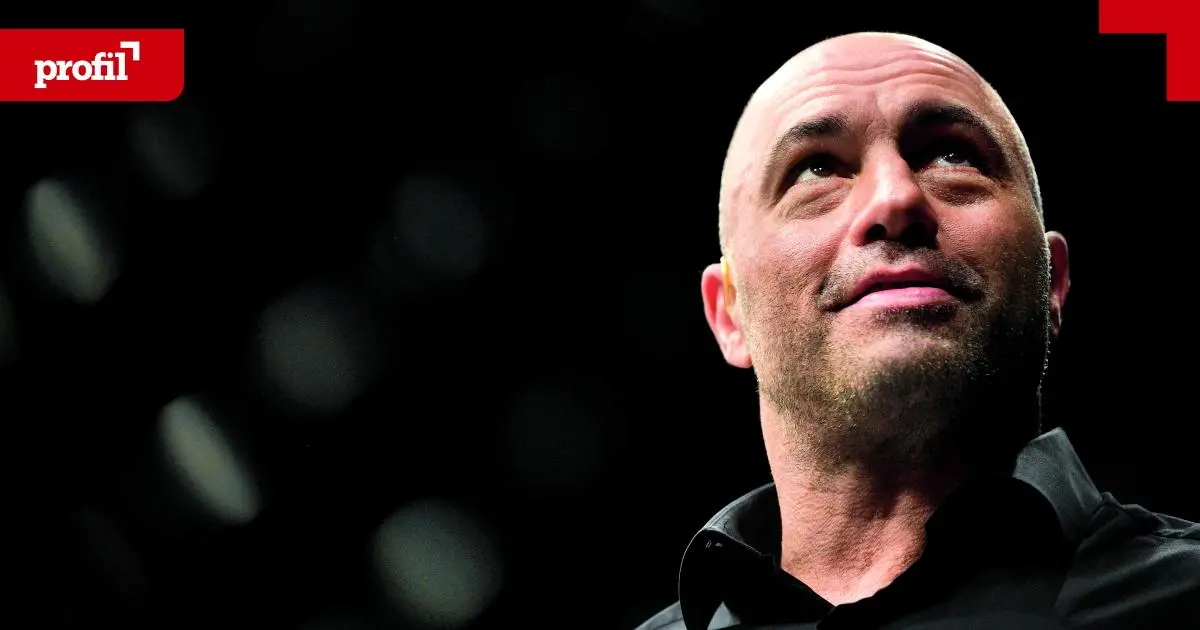
Joe Rogan, the unshaven man in a gray hoodie, has become a central figure in the debate over misinformation and free speech. With a podcast that boasts over 190 million monthly downloads on Spotify, Rogan's influence is undeniable. Yet, his approach to interviewing—often allowing guests to make controversial claims without challenge—has drawn fire from medical professionals, artists, and media critics. This article delves into Rogan's journey from a martial arts champion to a podcast titan, the controversies surrounding his show, and the broader implications for public discourse.
The Man Behind the Microphone
Joseph James Rogan was born on August 11, 1967, in New Jersey. His childhood was marked by instability: his father, a police officer, was reportedly violent, and his parents divorced when he was five. Rogan moved with his mother and later his stepfather—whom he describes as a 'hippie'—to California and then Massachusetts. In high school, he found solace in martial arts, eventually becoming a U.S. champion in Taekwondo. His friends in the martial arts community encouraged him to pursue stand-up comedy, and he began performing in clubs while working odd jobs to make ends meet.
Rogan's big break came in 1997 when he became an interviewer for the Ultimate Fighting Championship (UFC). His raw, unfiltered commentary—once describing a cut as 'as big as a goat's vagina'—endeared him to a predominantly male audience. He also hosted the reality show 'Fear Factor' and continued to perform comedy. In 2009, he launched 'The Joe Rogan Experience,' initially a low-budget operation from his home. The podcast grew organically, attracting first comedians, then A-list celebrities like Elon Musk, Miley Cyrus, and Bernie Sanders. In 2020, Spotify signed an exclusive licensing deal reportedly worth $100 million, cementing Rogan's status as a media powerhouse.
The Podcast Phenomenon
The format of 'The Joe Rogan Experience' is deceptively simple. Episodes often run three hours or more, with Rogan guiding conversations in a conversational, non-confrontational manner. He rarely prepares extensively, preferring to rely on his curiosity and quick wit. This approach has both strengths and weaknesses. On one hand, it creates an atmosphere where guests feel comfortable sharing unconventional ideas. On the other, it means that Rogan rarely pushes back against false or dangerous claims. He has said, 'I'm not a doctor or a scientist. I'm just a guy who sits down and talks to people.' This humility is part of his appeal, but it also opens the door to misinformation.
The podcast's reach is staggering: 190 million downloads per month, plus up to 10 million YouTube video views per episode, and 14.3 million Instagram followers. Rogan's audience trusts him in a way they don't trust mainstream media. This trust is a double-edged sword. When Rogan hosted Dr. Robert Malone, a virologist known for vaccine skepticism, Malone was allowed to spread theories about 'mass formation psychosis' and government-pharma collusion without interruption. The episode sparked outrage, with 270 doctors signing an open letter accusing Rogan of being a 'threat to public health.' Neil Young and Joni Mitchell removed their music from Spotify in protest, and the platform eventually added content advisories to some episodes—but did not remove them.
The Political Neutrality of Rogan
Rogan's political leanings are difficult to pin down. He has hosted both right-wing figures like Alex Jones and left-wing figures like Bernie Sanders. In 2020, he endorsed Sanders for the Democratic nomination, much to the delight of Sanders's campaign. However, he has also made comments that some consider misogynistic or transphobic, and he frequently rails against 'cancel culture.' His audience is largely male and tends to distrust institutional authorities. Rogan embodies a kind of rebellious individualism that appeals to those who feel alienated by mainstream narratives.
This political ambiguity is central to his success. By refusing to take a firm stance, he allows listeners to project their own beliefs onto him. When criticized, he retreats to the position of a curious questioner, claiming he just wants to hear different perspectives. But as comedian Bill Burr pointed out in one episode, it's disingenuous for two people without medical degrees to sit smoking cigars and pretend they know better than public health officials. Burr's outburst—'I don't have a degree in medicine, and neither do you!'—highlighted the core problem: Rogan's platform gives equal weight to facts and fiction.
The Censorship Debate
The controversy has ignited a fierce debate about how to handle misinformation. Spotify has chosen to add content advisories rather than remove episodes, arguing that censorship is not the answer. Some, like comedian Jon Stewart, urge critics to engage rather than boycott. 'Don't go away. Don't give up. Don't censor,' Stewart said, calling for more participation in the conversation. Yet others insist that Rogan's show is uniquely harmful because of its massive reach and his failure to correct falsehoods.
Ironically, attempts to ban Rogan or his guests may backfire. Robert Malone, banned from LinkedIn and Twitter, wears the bans as a badge of honor, reinforcing his narrative of being a persecuted truth-teller. For Rogan's followers, such measures only deepen their distrust of 'the system.' The situation mirrors the broader polarization in society: efforts to silence controversial voices often amplify them.
Joe Rogan's career is a testament to the power of authentic, unscripted conversation in an era of media fatigue. But as his influence grows, so does the responsibility that comes with it. Whether he will adapt his approach—or whether platforms will impose stricter controls—remains an open question. What is clear is that 'The Joe Rogan Experience' is more than a podcast: it's a cultural phenomenon that reflects and shapes the way millions of people think about information, authority, and truth.
Source: Profil News