

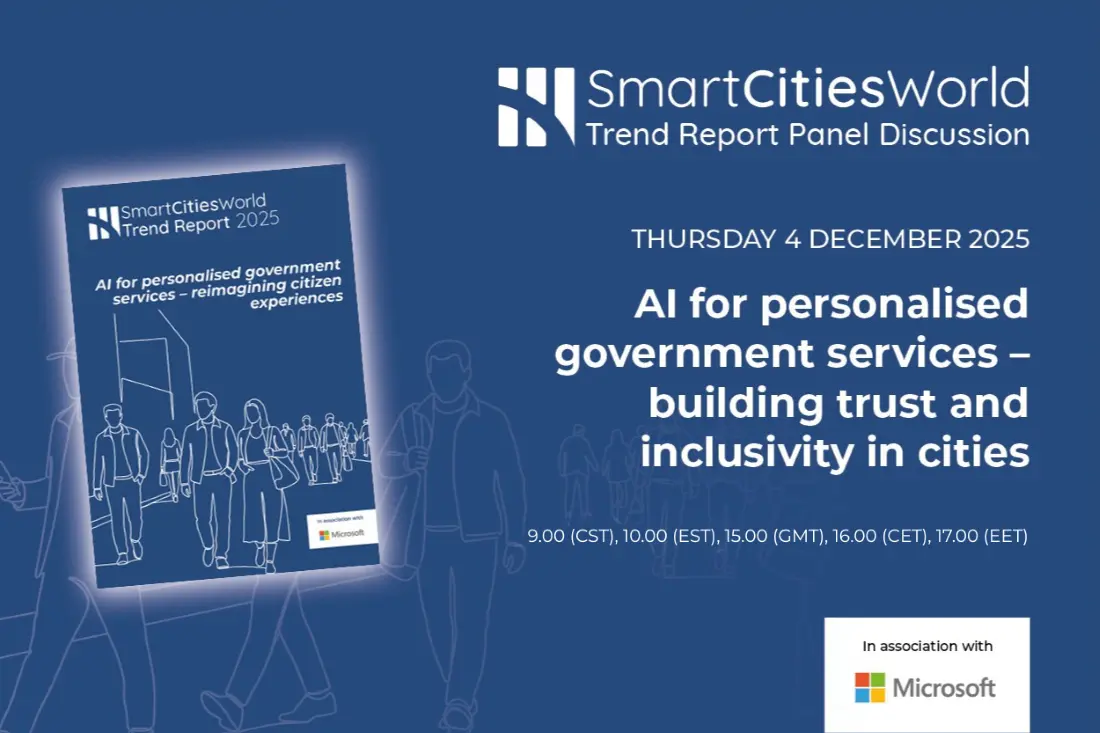
AI for Personalised Government Services: Building Trust and Inclusivity in Cities
Artificial intelligence is rapidly reshaping the landscape of urban governance, offering unprecedented opportunities to tailor public services to individual needs. A recent panel discussion, part of the OnDemand Trend Report, brought together thought leaders to explore how AI can foster trust and inclusivity in cities while enhancing efficiency and resilience. The conversation ranged from digital twins and intelligent transport systems to the critical need for interoperability and human oversight.
Digital Twins as the Intelligent Operating Layer
AI-powered digital twins are emerging as a transformative tool for urban infrastructure management. These virtual replicas of physical assets allow city planners to simulate scenarios, optimise resource allocation, and predict maintenance needs. The panel highlighted that by integrating real-time data from sensors, IoT devices, and citizen feedback, digital twins can improve efficiency, resilience, and sustainability. For instance, a digital twin of a city’s water supply network can detect leaks early, reduce waste, and ensure equitable distribution. Similarly, energy grids can be modelled to balance loads and integrate renewable sources seamlessly.
The concept of digital twins extends beyond physical assets to encompass social systems. By overlaying demographic data, mobility patterns, and service usage, cities can identify underserved communities and design interventions that address specific needs. This personalised approach to governance aligns with the broader goal of building trust — residents are more likely to engage with services that feel responsive and fair.
Data and AI in Urban Transport Networks
Urban transport networks are another domain where AI is driving personalisation. The panel discussed how data analytics and machine learning are being used to support day-to-day operations, from dynamic traffic signal timing to real-time route optimisation for public transit. For passengers, this translates into shorter wait times, fewer delays, and tailored travel information. Behind the scenes, AI helps planners model demand patterns, allocate resources during peak hours, and integrate multimodal connections.
One key example is the use of AI to improve outcomes for communities. In cities with high car dependency, predictive models can identify corridors where pedestrian and cycling infrastructure would have the greatest impact. By prioritising investments based on data rather than politics, authorities can build more equitable transport systems. The panel emphasised that the goal is not just efficiency but also reducing carbon emissions and improving air quality — factors that directly affect public health and trust in local government.
The Imperative of Interoperability and Human Oversight
Cristina Bueti of the International Telecommunication Union (ITU) offered a stark warning: cities must prioritise interoperability, inclusivity, and human oversight now, before fragmented systems and vendor lock-in define the future of urban AI. She argued that without common standards, data silos will prevent AI from delivering on its promise of personalised services. Citizens will lose trust if their data is misused or if algorithms make opaque decisions that affect their lives.
Bueti called for a multi-stakeholder approach involving governments, tech companies, academia, and civil society. Human oversight is crucial to ensure that AI systems are accountable and transparent. For example, when an AI system recommends social services to a family, there must be a mechanism for appeal if the recommendation seems unfair. Inclusivity means designing AI that works for all demographics, including the elderly, disabled, and non-native speakers. Interoperability ensures that systems across cities or even within the same city can share data securely, enabling seamless service delivery.
Designing for Upstream Resilience and Downstream Benefit
Woods Bagot’s Heinz von Eckartsberg and Impact Future’s Pablo Sepulveda brought an architectural and futures-thinking perspective to the discussion. They spoke about designing cities for upstream resilience and downstream benefit. Upstream resilience refers to proactive measures taken before disasters or disruptions occur, such as building flood defences or creating redundant power networks. Downstream benefits are the long-term advantages that accrue, like lower insurance costs and improved quality of life.
In the context of AI, upstream resilience might involve using predictive models to identify vulnerabilities in critical infrastructure. For downstream benefit, personalised government services can help citizens adapt to changing conditions. For example, after a heatwave, AI could personalise alerts about cooling centres based on a resident’s age and medical history. The panelists stressed that such systems must be co-designed with communities to ensure they address real needs and respect privacy.
City Profiles: Sunderland and Dublin Lead the Way
Two cities featured in the discussion provide concrete examples of how AI and digital infrastructure are being deployed. Sunderland is repositioning itself as a leading smart city, leveraging digital infrastructure and low-carbon innovation to build a resilient, future-focused economy. The city’s Smart City Programme includes a digital test bed for 5G and IoT, as well as projects in smart lighting, air quality monitoring, and intelligent waste management. Personalised services are emerging in areas like health: AI-powered apps help residents manage chronic conditions and connect with local health services.
Dublin is innovating to improve experiences and services for its communities. The city’s digital twin projects enable planners to visualise the impact of new developments before approvals. Traffic reduction initiatives, such as dynamic congestion pricing and real-time parking availability, are powered by AI. Economic growth is supported by data-driven decisions that attract investment while preserving liveability. Dublin’s approach emphasises collaboration with citizens, using feedback loops to refine services continuously.
Smart Lighting as a Foundation for Personalised Services
A recurring theme in the panel was the role of smart lighting as a foundational layer for urban AI. The podcast series “Cities Thriving on Lighting” by SmartCitiesWorld and Paradox Engineering examines the evolution of streetlights from simple illumination to connected platforms. LEDs enabled energy savings, but connectivity and interoperability now allow lights to host sensors for traffic, pollution, noise, and pedestrian movement. This infrastructure can be leveraged for personalised services: for instance, a streetlamp could dim when no one is around to save energy but brighten when an elderly resident walks by, using motion detection and AI to infer intent.
The second episode of the series focuses on how cities can turn existing streetlight networks into secure, interoperable, and future-proof infrastructure. This includes managing data privacy and cybersecurity. By integrating lighting with other municipal systems, cities can offer services such as emergency alerts via connected speakers or wayfinding for visually impaired citizens via audio beacons.
The UN Virtual Worlds Day and the Citiverse
The panel also highlighted the UN Virtual Worlds Day, an event that explores how AI, spatial intelligence, and the Citiverse ecosystem can be turned into trusted, people-centred outcomes. Paul Wilson, a key organiser, invited participants to join the conversation. The Citiverse — a convergence of city digital twins, virtual reality, and AI — holds potential for personalised services on an immersive scale. Imagine a resident using a VR headset to test a proposed new park layout and provide feedback, or a commuter experiencing a personalised simulation of their route options.
However, the panel cautioned that the Citiverse must be built on principles of trust and inclusivity. Access must be broadly available, not just to wealthy tech-savvy users. Data rights must be protected, and algorithms must avoid reinforcing biases. The UN event aims to establish ethical guidelines and best practices for this emerging domain.
Smart Sensor Networks for Indoor Safety
Finally, the discussion touched on how smart sensor networks can improve indoor safety, a vital component of personalised government services. In public buildings like libraries, hospitals, and schools, sensors can detect risks early — such as gas leaks, temperature anomalies, or unauthorised access. AI processes these data streams to improve situational awareness and trigger automated responses, like locking doors or alerting maintenance. Healthier, more secure, and sustainable buildings are a foundation for trust in public services. For example, AI can personalise heating and cooling based on occupancy patterns, improving comfort while saving energy.
The panel concluded that as cities invest in these technologies, they must always keep the human element at the centre. Personalised government services should not be a top-down imposition but an opportunity for citizens to shape their environment. Trust is built when services work reliably, data is handled responsibly, and every resident feels included. Inclusivity means that AI doesn’t just serve the majority but actively reaches out to those who are often left behind — the elderly, the disabled, low-income households, and minority communities.
Check out the OnDemand Trend Report Panel Discussion for more in-depth insights from the experts. The event recording and related resources provide a wealth of actionable advice for city leaders, planners, and technologists alike. As urban populations grow and challenges intensify, AI offers a pathway to smarter, more humane cities — but only if we commit to building trust and inclusivity from the ground up.
Source: Smart Cities World News