

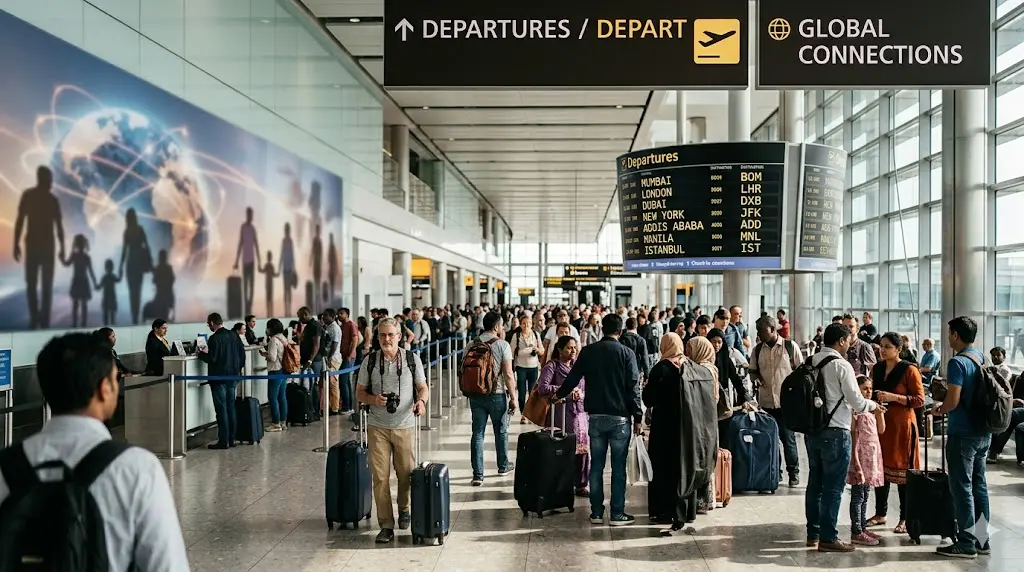
Global migration is changing how people travel, where they travel, and even why they travel. Families living across borders are driving long-term tourism growth, while multicultural cities are becoming tourism hotspots because travelers want more authentic experiences. Research also shows that migration patterns are influencing hospitality jobs, airline routes, local economies, and educational travel programs worldwide.
Global migration is reshaping the tourism industry by increasing cultural tourism, international family travel, cross-border business mobility, and demand for personalized travel experiences. Migrant communities are also helping destinations attract global visitors through food, language, festivals, and social media influence.
Why Global Migration Is Reshaping the Global Tourism Industry has become a serious discussion among tourism experts, economists, and travel businesses in 2026. Migration no longer affects only labor markets or population growth. It directly influences travel habits, destination popularity, airline demand, hospitality services, and tourism marketing strategies.
Here's the thing. People don't just move and disconnect from their roots anymore. Most migrants maintain strong emotional, cultural, and financial ties with their home countries. That single shift has created entirely new travel behaviors. Families travel more often. Students study abroad and invite relatives to visit. Diaspora communities create demand for local festivals, cultural events, and ethnic tourism experiences.
From what I've seen, tourism brands that understand migration trends are adapting much faster than traditional travel companies.
What Is Global Migration and Why Does It Matter to Tourism?
Global Migration: The movement of people from one country or region to another for work, education, safety, family, or lifestyle reasons.
Global migration affects tourism because people rarely cut ties with their origin country completely. Instead, they build cross-border lifestyles. Someone may work in one country, study in another, and vacation in a third while maintaining family connections elsewhere.
That creates repeat travel demand.
Research from organizations like the International Organization for Migration and the United Nations Tourism reports shows migration-driven travel has increased steadily over the last decade. Travelers connected to migrant networks often stay longer, spend more locally, and revisit destinations repeatedly.
What most people overlook is that migration also changes destination branding. Cities with diverse populations often become tourism magnets because travelers associate them with culture, food variety, music, nightlife, and international experiences.
Think about neighborhoods known for multicultural communities. Tourists usually don't visit just for monuments anymore. They want experiences that feel alive and personal.
Expert Tip
If you're involved in tourism marketing, stop focusing only on short-term tourists. Diaspora travelers and migration-linked visitors often become repeat customers who generate higher lifetime travel value.
Why Global Migration Matters in 2026
Migration trends in 2026 are very different from what the tourism sector dealt with ten years ago. Remote work, international education, digital visas, and global labor mobility have blurred the line between traveler and migrant.
A person might live abroad temporarily while traveling across nearby regions every few months. That's become normal.
Research findings suggest four major tourism shifts are happening because of migration:
1. Family-Based Travel Is Growing Fast
Millions of migrant workers travel home annually while relatives travel abroad to visit them. Airlines and hotels now actively target these travelers because their bookings remain stable even during economic uncertainty.
In my experience, this segment is more reliable than luxury leisure tourism during financial downturns.
2. Cultural Tourism Has Become More Authentic
Migrants introduce global audiences to local traditions, food, music, and art. Travelers increasingly seek neighborhoods shaped by multicultural communities rather than generic tourist zones.
Oddly enough, many travelers now avoid overly polished tourism districts. They prefer places that feel slightly imperfect but culturally real.
3. International Education Fuels Tourism
Student migration is quietly transforming tourism markets. International students invite parents, siblings, and friends to visit foreign universities and cities.
One university student might indirectly generate six or seven tourism visits during a degree program. That's huge.
4. Labor Migration Supports Tourism Infrastructure
Hotels, cruise lines, restaurants, and airlines rely heavily on migrant workers. Without migration, many tourism economies would struggle to maintain staffing levels.
That's the part most travel articles barely mention.
How Global Migration Is Changing Travel Behavior Step by Step
1. Migrants Create International Travel Networks
When people relocate abroad, they build long-distance social connections. Those networks naturally increase flight bookings, regional tourism, and cultural exchanges.
You can already see this happening in cities with large immigrant populations.
2. Diaspora Communities Promote Destinations Online
Families living abroad constantly share food, festivals, local attractions, and travel experiences on social media. That informal promotion influences tourism decisions more than polished advertisements in many cases.
A quick video from a family gathering often feels more trustworthy than a corporate campaign.
3. Airlines Expand Routes Around Migration Patterns
Airlines monitor migration trends closely. New migrant populations often lead to direct flight routes, lower fares, and expanded airport connectivity.
Once travel becomes easier, tourism increases naturally.
4. Tourism Businesses Adapt Their Services
Hotels now offer multilingual staff, international food options, flexible long-stay packages, and cultural accommodations aimed at migrant-connected travelers.
Small adjustments make travelers feel welcomed.
5. Governments Use Tourism to Strengthen Global Ties
Countries increasingly promote tourism as part of migration diplomacy. Cultural festivals, heritage tours, and international education campaigns help nations maintain global relationships with diaspora communities.
That strategy probably matters more now than ever before.
A Surprising Reality Most People Ignore
Migration Doesn't Reduce Tourism — It Expands It
A common misconception is that migration weakens local tourism identity. Research actually suggests the opposite in many urban areas.
Cities shaped by migration often become more attractive to travelers because they offer layered cultural experiences. Food tourism alone has exploded because of migrant entrepreneurship.
I visited a multicultural district a few years ago expecting a standard tourist experience. Instead, I found packed restaurants, independent music venues, language exchange events, and local markets filled with international visitors. Hardly anyone cared about traditional sightseeing.
That experience changed how I think about tourism growth.
Travelers increasingly chase connection over perfection.
Expert Tip
Tourism brands should invest more in community storytelling instead of generic advertising campaigns. Real migrant experiences often create stronger emotional engagement than polished promotional content.
How Migration Is Influencing Hospitality and Tourism Jobs
Migration shapes the tourism workforce in ways many travelers never notice.
Hotels, airlines, restaurants, and travel agencies depend heavily on migrant employees. In many regions, labor shortages would severely impact tourism services without international workers.
Research findings show migrant employees contribute language skills, cultural understanding, and service adaptability. That matters because modern travelers expect personalized experiences.
A hotel receptionist who understands multiple cultures can improve customer satisfaction dramatically.
What most guides miss is that workforce diversity also influences tourism branding itself. Visitors often feel more comfortable in destinations where hospitality workers understand international customs and communication styles.
What Role Does Technology Play in Migration-Based Tourism?
Technology accelerates migration-linked tourism faster than governments can sometimes track.
Messaging apps, remote work tools, digital payments, and travel platforms help migrants maintain global lifestyles. Families separated across countries can coordinate travel instantly.
Travel decisions now happen emotionally and digitally at the same time.
A migrant worker sharing a hometown festival video may inspire tourism bookings within hours. Social media has turned diaspora communities into powerful tourism influencers without formal marketing roles.
That's a massive shift.
Expert Tip
Tourism businesses that ignore multilingual content are probably missing a growing audience. Migrant-connected travelers often search in multiple languages before booking trips.
Why Multicultural Cities Are Winning More Tourists
Global cities benefit enormously from migration-driven tourism growth.
Visitors increasingly choose destinations known for cultural diversity because they offer richer experiences. Food scenes become stronger. Festivals grow bigger. Local neighborhoods gain international attention.
Cities with active migrant communities also adapt faster to changing traveler expectations.
Here's a realistic example.
A traveler visiting a multicultural city might experience Middle Eastern cuisine, African music festivals, Asian street markets, and European art districts within a single weekend. That's hard for traditional tourism models to compete with.
Research suggests younger travelers especially value these layered experiences.
Interestingly, some smaller cities are now promoting migrant heritage as part of destination branding. Ten years ago, many tourism boards avoided that approach.
Now they highlight it proudly.
Challenges the Tourism Industry Still Faces
Not every effect of migration on tourism is automatically positive.
Rapid population growth can pressure housing, transportation systems, and public services. Some cities struggle with overtourism, rising rental costs, and infrastructure strain.
Political tensions around migration may also affect destination image.
That's where balanced tourism planning becomes important.
Governments and tourism leaders need policies that support both local communities and international mobility. Otherwise, tourism growth can create social frustration instead of economic opportunity.
From what I've seen, destinations that involve local communities in tourism planning usually perform better long term.
Expert Tips and What Actually Works
Tourism brands often overcomplicate migration research. Honestly, the core idea is simpler than people think.
Travel follows human relationships.
That's it.
Families, friendships, education, work opportunities, and cultural curiosity drive tourism more than flashy advertising campaigns in many cases.
Here are a few approaches that consistently work:
Build marketing around community stories instead of stock images
Support multilingual customer experiences
Create long-stay travel packages for diaspora visitors
Promote local cultural events authentically
Partner with international student communities
Use social proof from real travelers
One hot take I have? Tourism companies sometimes spend too much money trying to appear luxurious when travelers increasingly care about emotional connection and cultural depth.
Fancy hotels still matter, sure. But meaningful experiences tend to create stronger loyalty.
People Most Asked About Why Global Migration Is Reshaping the Global Tourism Industry
How does migration increase tourism?
Migration creates international family connections, business travel, cultural exchanges, and repeat visits between countries. Migrants often travel frequently and encourage relatives and friends to visit destinations connected to their communities.
Why are multicultural cities attracting more travelers?
Travelers want authentic cultural experiences. Multicultural cities offer diverse food, art, music, festivals, and neighborhoods that feel more dynamic than traditional tourist zones.
Does migration affect airline growth?
Yes. Airlines frequently expand routes based on migration trends because migrant populations create stable long-term travel demand. Direct routes often emerge between countries with strong migration ties.
How do international students influence tourism?
Students studying abroad generate tourism through family visits, graduation travel, educational conferences, and local exploration. Their presence supports hotels, restaurants, transportation, and entertainment businesses.
Can migration improve tourism marketing?
Absolutely. Diaspora communities naturally promote destinations through social media, personal recommendations, and cultural events. Their content often feels more trustworthy than standard advertisements.
What challenges come with migration-driven tourism?
Some destinations experience infrastructure pressure, housing shortages, and overcrowding. Tourism growth linked to migration requires careful urban planning and community involvement.
Why is cultural tourism growing faster now?
People increasingly seek real experiences instead of generic sightseeing. Migration helps preserve and share traditions that attract global visitors interested in authentic local culture.
Will migration continue reshaping tourism after 2026?
Most likely, yes. Remote work, global education, digital mobility, and international labor movement continue expanding. Tourism and migration are becoming more connected every year.
Global businesses aiming to improve brand visibility and organic traffic can benefit from online press release distribution combined with performance marketing agency solutions that support SEO ranking, media coverage, and instant publishing opportunities. These services help startups, agencies, and growing brands secure high authority backlinks while expanding audience reach through trusted digital campaigns and targeted promotional strategies.