

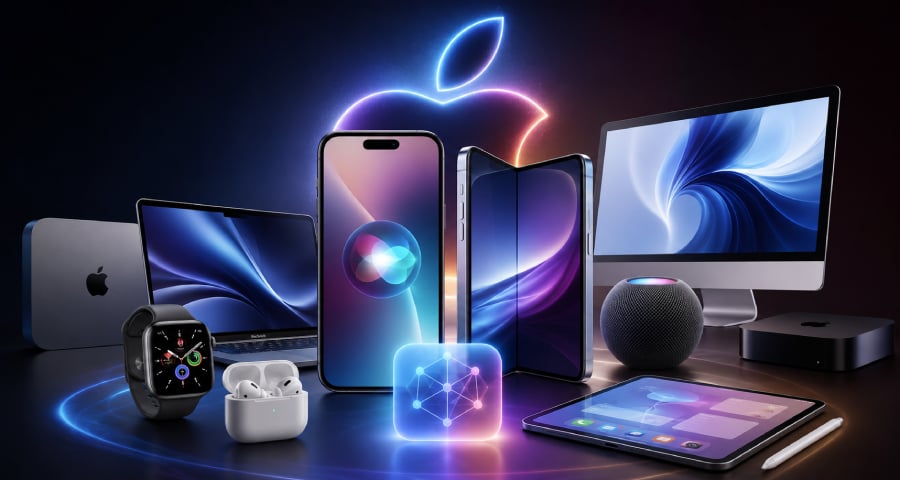
Apple’s next Worldwide Developers Conference (WWDC) is shaping up to be a pivotal moment for the company’s artificial intelligence ambitions. Scheduled from June 8 to June 12, 2026, with the keynote on Monday morning, the event is expected to preview iOS 27, iPadOS 27, macOS 27, watchOS 27, tvOS 27, and visionOS 27. However, the spotlight is firmly on Apple’s long-delayed AI plans, particularly a complete overhaul of its voice assistant Siri, which has lagged behind competitors like Google Assistant and Amazon Alexa for years.
iOS 27: Siri Finally Gets Its AI Upgrade
The most anticipated announcement is the introduction of a much more capable Siri within iOS 27. Reports indicate that Apple has been developing a long-delayed Siri 2.0 experience that moves away from the traditional command-based model toward a conversational chatbot interface. This new Siri is rumored to include personal context awareness, allowing it to recall past conversations and provide recommendations based on user history. It will also feature on-screen understanding, enabling it to act on content currently displayed on the device, and deeper app control, such as cross-app actions like sharing estimated arrival times or sending content between applications.
Leaks suggest that Apple is testing a standalone Siri interface with a more expressive visual design that reacts dynamically when the assistant is active. This would turn Siri into a full conversational tool, akin to ChatGPT or Google Gemini, rather than just a voice command system. TechRepublic has previously reported that Apple is internally testing a chatbot-style Siri app experience, signaling a major shift in the company’s approach to virtual assistants.
A More Open AI Ecosystem on iPhone
Beyond Siri itself, Apple may be preparing a broader shift in how AI functions on iPhones. According to sources from Tom’s Guide, Apple could allow users to choose among different AI models through an extension-style system. This would enable third-party assistants to integrate more deeply with Apple Intelligence features like Writing Tools and Image Playground. If accurate, this marks a notable departure from Apple’s traditionally tightly controlled ecosystem, opening the door for partnerships with companies like Google, OpenAI, or Anthropic.
This move would also address growing user demand for flexibility in AI tools. Many consumers have gravitated toward specialized AI platforms for tasks like image generation or text summarization, and allowing iPhone users to plug in their preferred models could finally make Apple Intelligence a competitive platform.
iOS 27 Features Spreading Across Apple Devices
While iOS will lead the AI charge, many of these changes will extend to iPadOS and macOS 27, maintaining consistency across Apple’s ecosystem. Other rumored upgrades include AI-powered photo editing features such as “Enhance,” “Extend,” and “Reframe,” which would compete with Adobe’s generative fill tools. Wallet upgrades are expected to allow users to create digital passes from QR codes, simplifying event ticketing and loyalty program management. Smarter autocorrect is also on the cards, capable of suggesting rewrites and alternative wording based on context.
There is talk of Apple refining its Liquid Glass design language, with iOS 27 potentially acting as a cleanup release focused on stability and performance rather than a visual overhaul. This suggests Apple is prioritizing functional improvements over flashy interface changes, a welcome shift for users who have experienced inconsistency in recent updates.
macOS 27: Subtle Redesign and Productivity Tweaks
For the Mac, Apple is not expected to reinvent the wheel but will smooth out some rough edges. MacRumors reports that macOS 27 will feature a slight redesign aimed at improving readability issues introduced by the Liquid Glass interface. Transparency and shadow effects, which have made text-heavy areas harder to read in some cases, are expected to be adjusted for better clarity and contrast. A new Safari feature called “Organize Tabs” is also rumored, which will automatically group tabs based on user behavior or preferences, streamlining workflows for heavy multitaskers.
These tweaks reflect Apple’s ongoing effort to polish the Mac experience without making radical changes. Given the success of Apple Silicon, the Mac has seen a resurgence in popularity, and minor refinements like these can have a significant impact on everyday productivity.
watchOS and Ecosystem-Wide Updates
watchOS 27 is expected to be more incremental but still notable, with new watch faces including a variation of the Modular Ultra design. Across the ecosystem, Apple is aligning iOS, iPadOS, and macOS more closely, especially in AI features and app behavior. Some reports suggest groundwork is being laid for future devices like the iPhone Ultra, which would require software optimized for split-screen and flexible layouts. This indicates Apple is preparing for a broader hardware expansion, possibly into foldables or dual-screen designs.
Hardware Rumors Still Hanging Over WWDC
While WWDC is primarily a software-focused event, Apple occasionally uses it to tease hardware. This year, speculation is swirling around new Macs powered by next-generation chips like the M5 family, though there is no confirmation they will appear on stage. WWDC 2026 will be a hybrid event, kicking off with the keynote on Monday morning. While some advanced AI features might not ship until later in the autumn, the June preview will set the tone for Apple’s ecosystem for the next year. More concrete hardware announcements are expected later in the year, especially around the iPhone 18 lineup and Apple’s rumored foldable device.
As Apple prepares to showcase its most significant AI push in years, the pressure is on to deliver a Siri that can compete with the best in the industry. Whether WWDC 2026 marks a turning point for the company or another iteration remains to be seen, but the stakes have never been higher.
Source: TechRepublic News